Buddhist Approach to Living and Dying

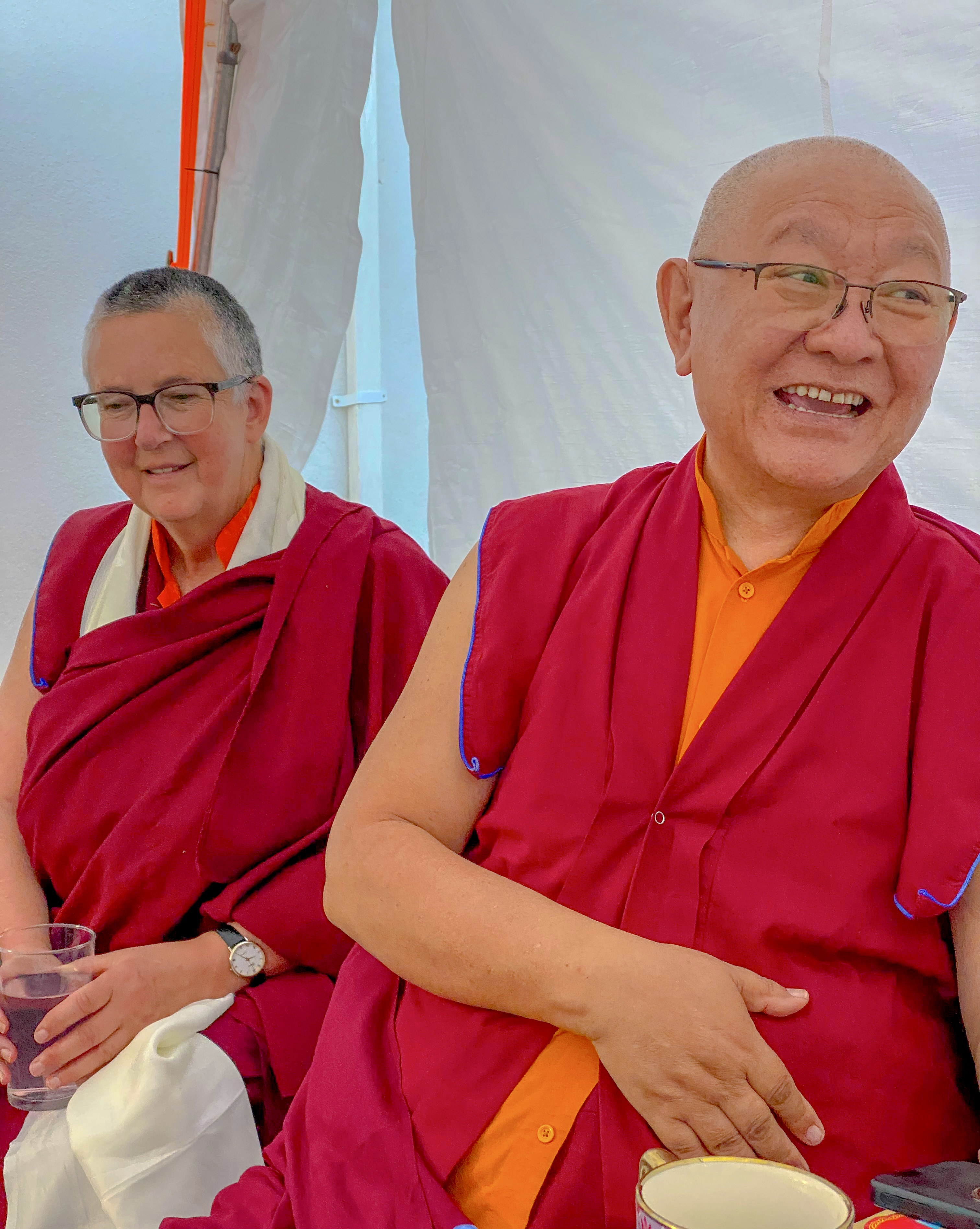
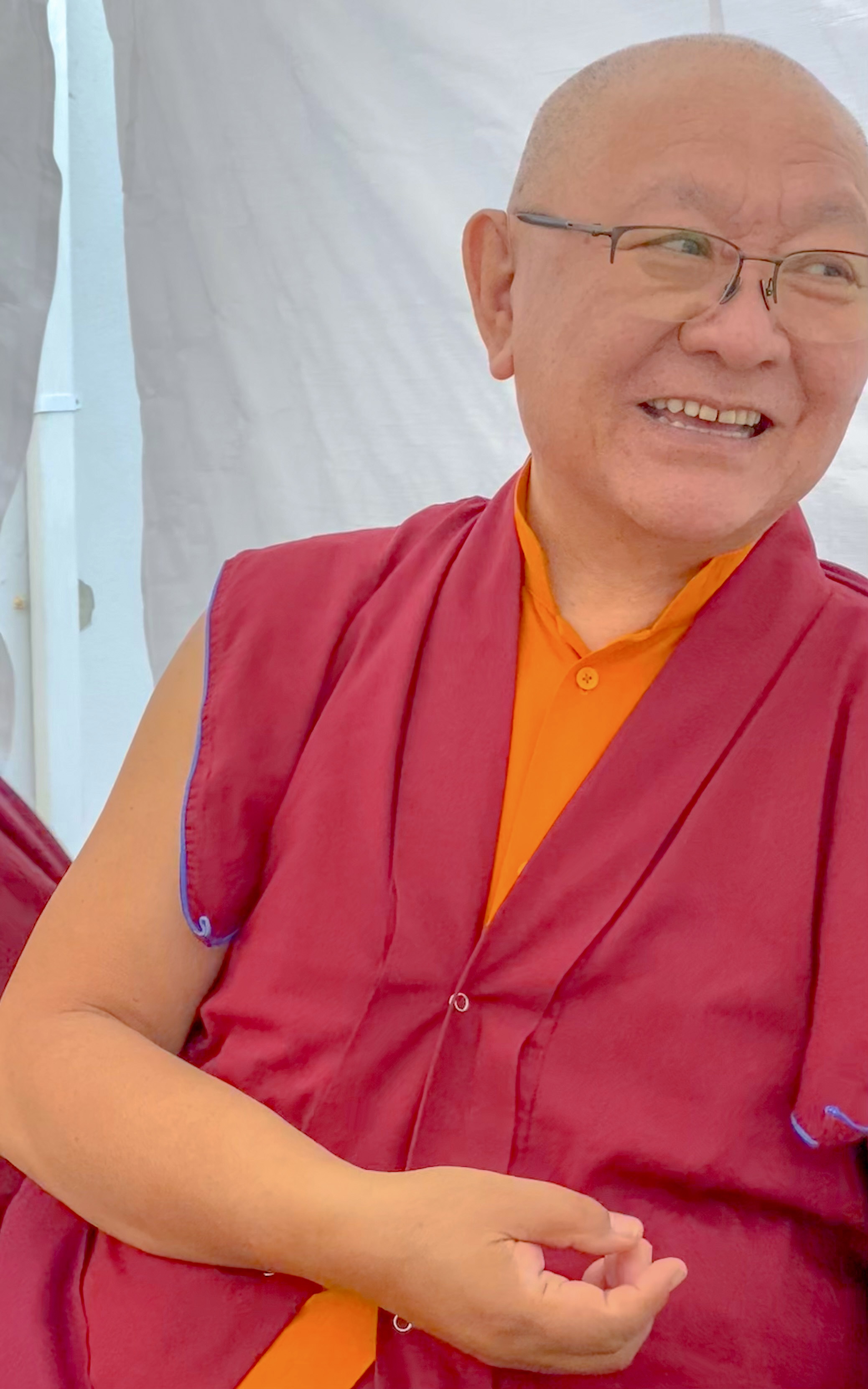
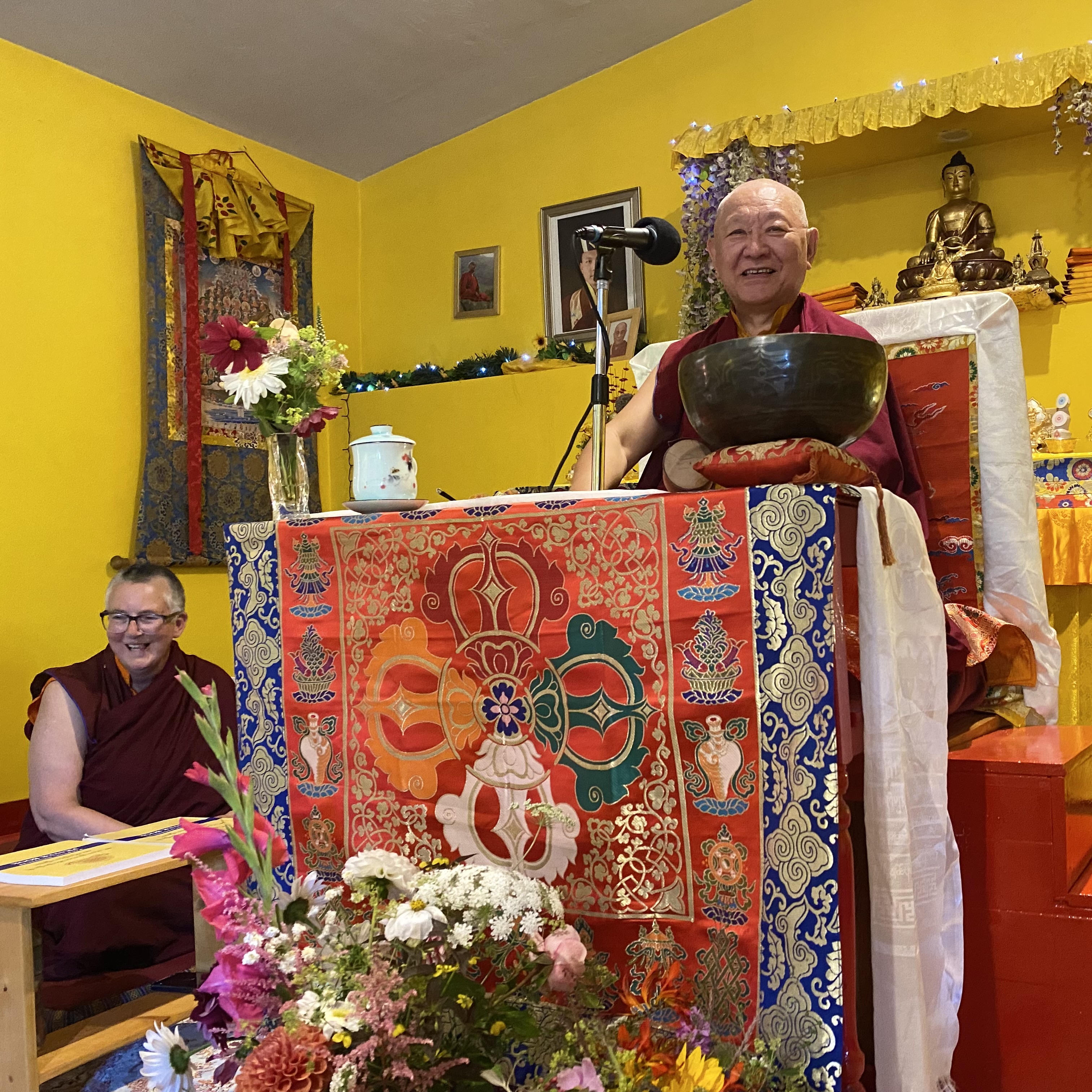
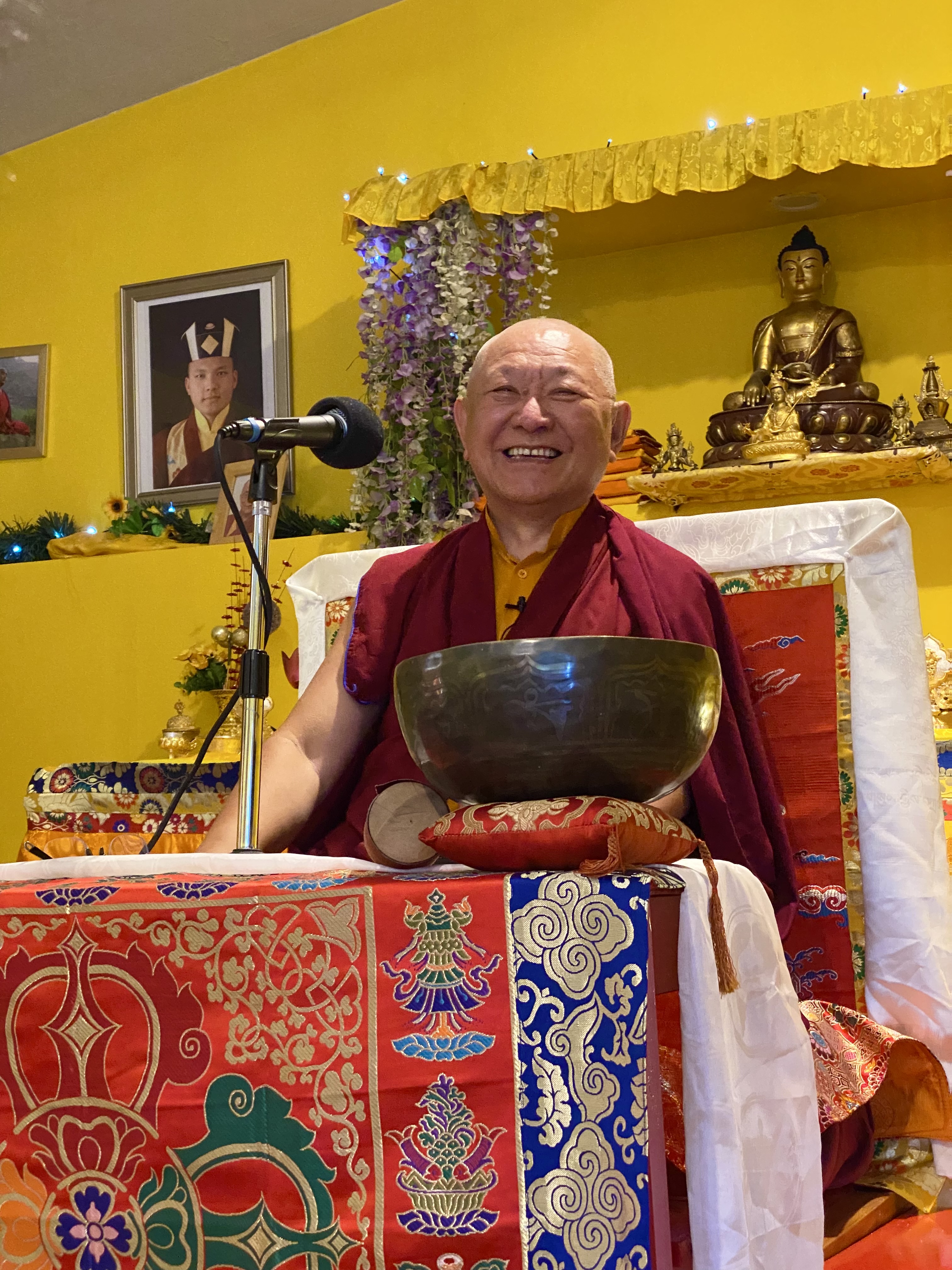
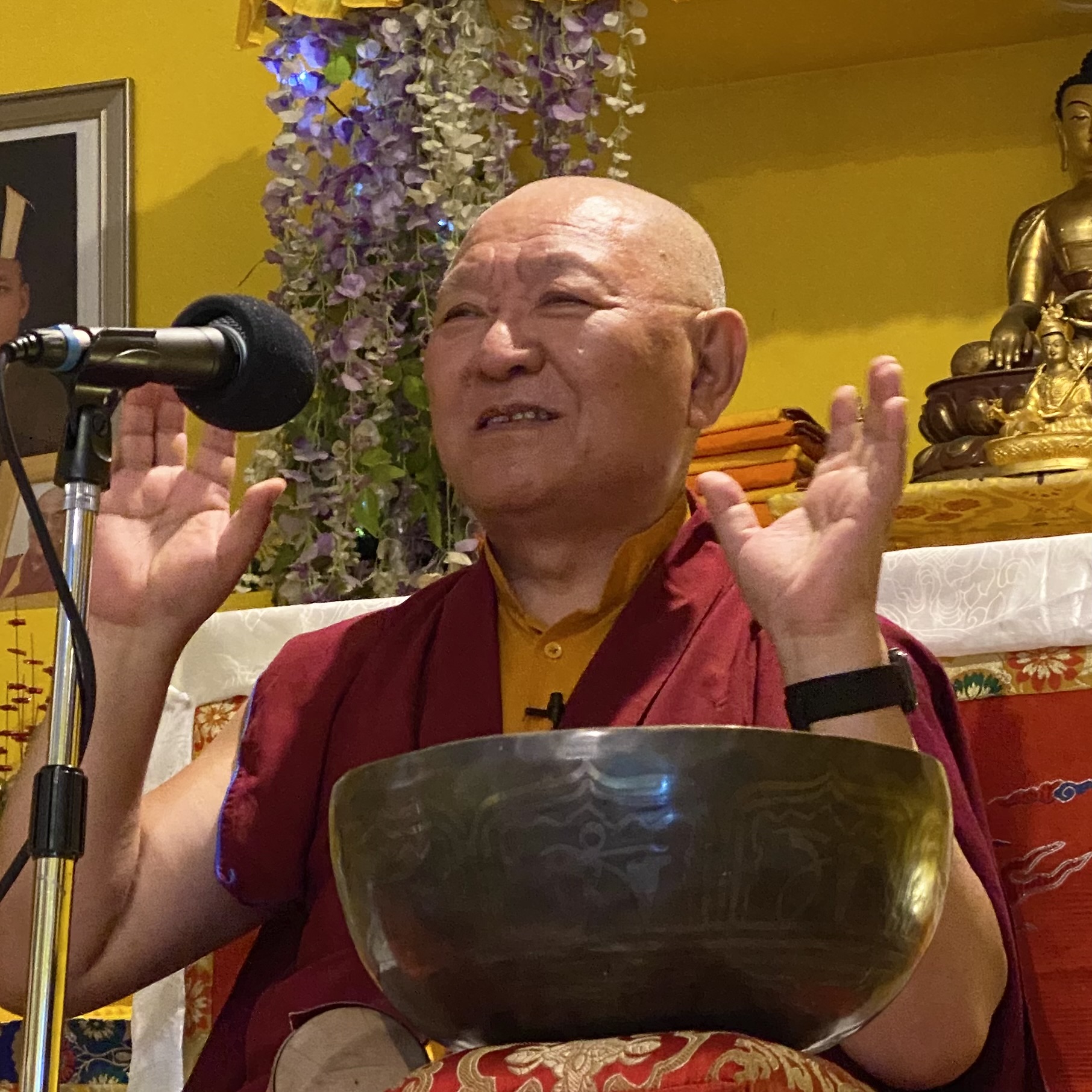
A teaching on the Buddhist Approach to Living and Dying, given at Palpung Ireland in Banteer.
How we face our problems is shaped by: how we react; our way of experiencing things; and our attitude and understanding.
We can’t always control circumstances externally, but we can change our way of reacting, and the way we experience our life and bardo experiences. This enables us to be less fearful and anxious, with more wisdom and kindness.
Our practice is how we transform ourselves. We watch our emotions and reactions. We all become old and we all have to die and be reborn.
So, are we prepared?
It will happen.
So we should reflect and live our life as a continuity transition all the time. In life we will always experience changes, regardless of our permissions or acceptance! Continually without stopping. We can try to hold on to a static situation, without success! We can grasp at past experiences, regardless of circumstances changing all the time. We can’t resolve or bring back yesterday- so we allow the past to be in the past.
We accept that people have samsaric tendencies with greed and anger. This is useful, as it means we needn’t have unrealistic expectations that people don’t have weaknesses. Samsaric beings, including ourselves, are under the control of negative emotions. If we understand this deeply, we don’t have to hate others, but instead ACCEPT them with kindness and compassion. See that there is no reason to hate them or wish them bad; as this just perpetuates our suffering and harm to others. So we work to let go of our anger, hatred, greed, selfishness and misunderstanding, to assist with peace of mind.
THIS is Dharma practice.
When we see and accept that such negative approaches are no good for me: we lessen them and we feel lighter and more joyful, with less worry regarding loss; or anguish when things are lost. Greed may result us in being a bit richer for a short time, but which we will then definitely always lose!
This understanding brings us more joy, tranquility, peace and compassion. This is wisdom, and is more ultimately true. There is no need to have fear nor anxiety. Neither fear nor worry are protective! Why react dysfunctionally this way all the time? There is no need to be miserable, if something doesn’t happen -maybe it will be okay? Perhaps for the best in the long run?
If we understand: what it is that we call “me“? What is it that I am? Solid? Truly there? We can come to an appreciation of impermanence and interdependence: recognising that nothing truly exists on its own. Nothing is truly there, and the same is true for”me“. We know that elements and space are interchangeable with energy. So what is it that I am? When we truly understand what we are: interdependently existing only; not truly existing independently- can we be destroyed?
What is death?
We can go deeply into this. There is nothing fixed called “me” that can actually die. Death is nothing to fear or worry about. Everything happens like a dream-there is nothing to worry about. This recognition allows us to become unshakeable. To go through life without problems, when we understand and experience this.
The identity “me” is nothing fixed, real, or true. With this wisdom we can understand what we really are, and develop non-grasping, untainted, compassion.
Questions & Answers
1)Q. How do prayers beside a dying person help them? A. Dying people often feel weak and vulnerable. So kindness and support can help them at this time.
The elements dissolve progressively in the dying phase: first, the earth element (making up flesh and bones) dissolves -so the body feels heavy; then the water element dissolves (representing bodily fluids) and the body feels dry; then heat/fire dissolves leaving the body feeling cold; and the air/wind dissolves as breathing ceases. Our consciousness dissolves into the subtle clear light, akin to a deep sleep. We become aware again, but with a mental body, where the mind is x7 clearer. If people can project kindness and positive compassion at this time; the dead person can feel peaceful, grateful and joyful. So such prayers are definitely useful. If the mind thinks of Dewachen, it will be reborn there.
2) Many different manifestations are described in the Bardo Tödrol Chenmo (བར་དོ་ཐོས་གྲོལ་ཆེན་མོ་) or “The Great Liberation through Hearing in the Bardo“, a terma discovered by Karma Lingpa. However, there is no need to be afraid of your mind’s radiance and projections. Whatever happens: look at it and experience it in a positive way. Every stage is an opportunity to be liberated. All these instructions are reminders. We can repeat such reminders by narrating to the dying person.
3)When someone dies, it is useful to practice the dead person’s main practice (the one they have been doing). Doing prayers is beneficial throughout and after the dying process.
Images and notes by Conrad Harvey.