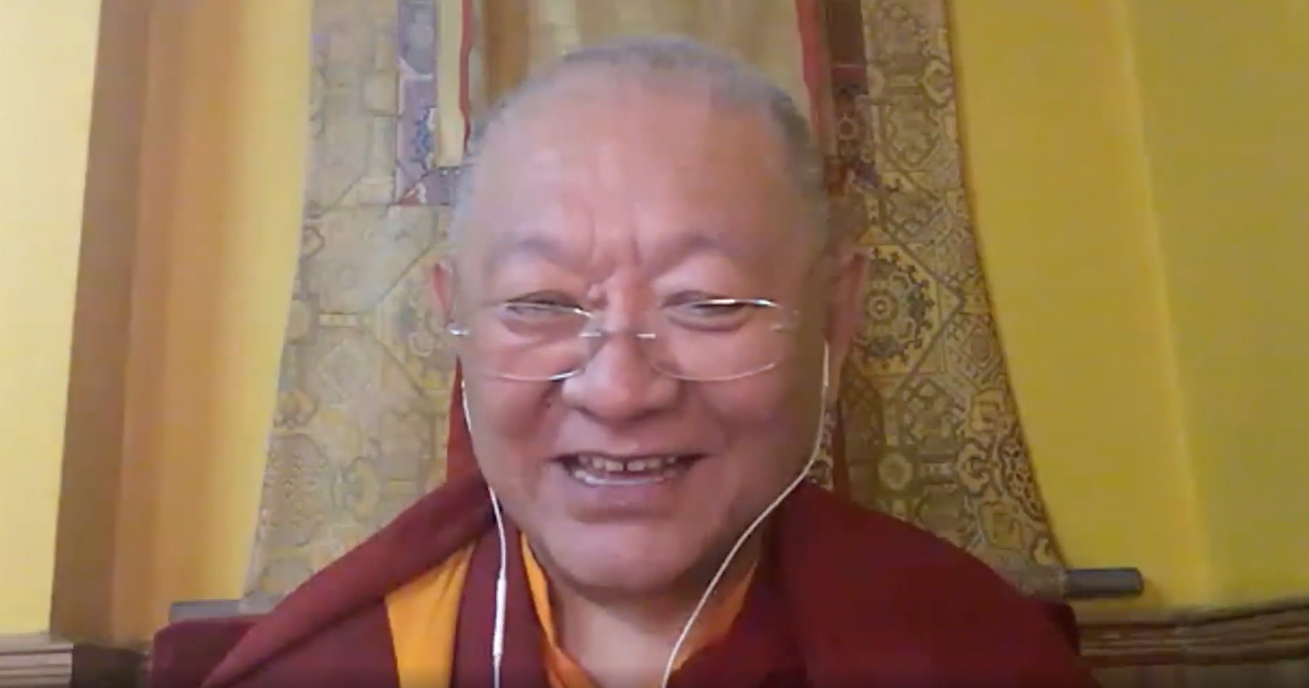
In June 2020, amidst the height of the global COVID-19 pandemic, Ringu Tulku Rinpoche delivered this three-part live teaching from Gangtok, Sikkim, at the request of Margaret Richardson of Rigul Trust. Rinpoche taught from the practice text ‘A short daily practice for White Tara’ composed by Benchen Tulku Tenga Rinpoche.*
Rinpoche offered a lucid, practical commentary and the reading transmission (lung) for ‘A short daily practice for White Tara‘ (sgrol dkar yid bzhin ‘khor lo’i rgyun khyer), composed by the renowned master and former Dorje Lopön of Rumtek Monastery, Kyabje Benchen Tulku Tenga Rinpoche. Translated by Thomas Roth (Sherab Drime), this concise liturgical manual serves as an accessible vehicle for pacifying diseases, removing life-threatening obstacles, and cultivating deep healing and longevity.
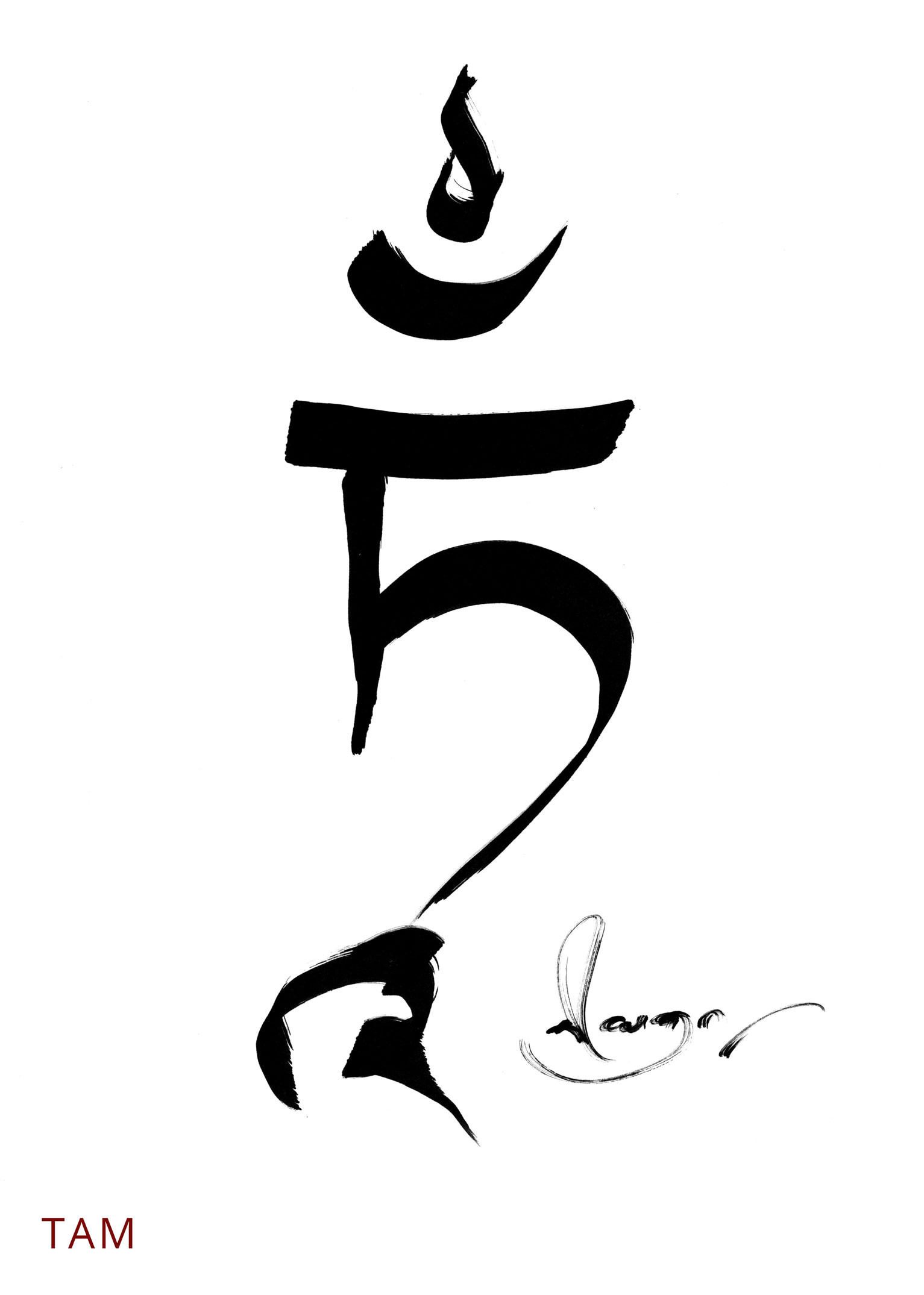
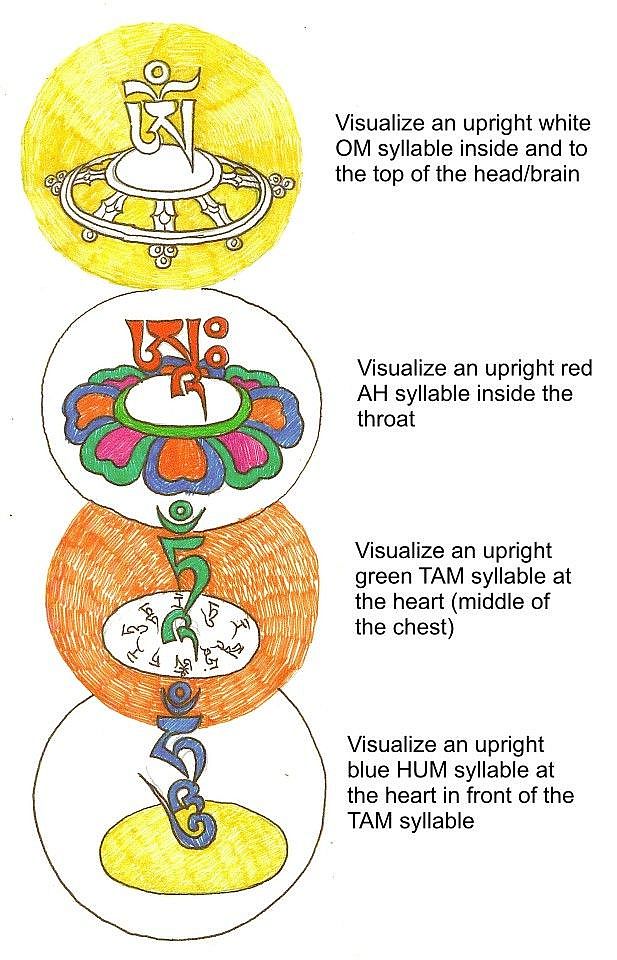
Rinpoche introduces the practice by unpacking the foundational Buddhist framework of refuge and bodhicitta from an experiential perspective. He presents taking refuge not as mere formal recitation, but as an act of fundamental compassion towards oneself—a decisive commitment to liberate one’s own mind from confusion and suffering under the guidance of the Three Jewels. Bodhicitta expands this self-compassion outwards to embrace all sentient beings without exception. Moving systematically through the sadhana, Rinpoche explains the generation stage (bskyed rim) and completion stage (rdzogs rim), detailing the initial dissolution into emptiness, the manifestation of the protective circle and celestial palace, the arising of the seed syllable TĀṂ, and the emergence of White Tara Cintācakra adorned with her seven wisdom eyes. He provides step-by-step guidance on radiating and gathering healing lights to harmonise the subtle elements and restore damaged life essence.
Throughout the subsequent question-and-answer sessions, Rinpoche addresses essential aspects of Vajrayāna view and method. He reassures practitioners who find complex visualisations challenging, encouraging them to focus primarily on resting in loving-kindness, devotional presence, and the audible resonance of the mantra. Visualisation is demystified as an educational and psychological training aimed at transforming karmic perceptual habits rather than fabricating solid mental objects; the deity must be apprehended as luminous and transparent, like a rainbow in the sky. To illuminate how blessings and online transmissions function across digital mediums, Rinpoche offers the classical analogy of the moon reflecting flawlessly in countless vessels of clear, calm water: spiritual efficacy does not hinge upon physical proximity, but upon the clarity and openness of the student’s mind.
Rinpoche clarifies the word-by-word meaning of both the short ten-syllable mantra and the long-life mantra, unwraps the inner psychological symbolism of the eight great fears, and resolves practical concerns regarding ritual implements, mudrās, and managing multiple daily commitments. Emphasising that all sadhana practice resolves ultimately into calm abiding (śamatha) and profound insight (vipaśyanā), Rinpoche concludes with the traditional oral reading transmission, reminding students that cushion practice must seamlessly infuse daily post-meditation conduct, sealed always by the dedicated accumulation of merit for all living beings.
Video Chapter Markers
Part 1:
00:00:05 – Welcome and Background of the Teaching
00:03:04 – Kyabje Tenga Rinpoche and the Lineage of the Sadhana
00:07:34 – The Bodhisattva Vow of Tara and Motherly Energy
00:11:00 – White Tara as a Practice for Healing and Longevity
00:14:44 – Refuge and Bodhicitta: Compassion for Self and Others
00:28:44 – Vajrayāna Principles: Deity Visualisation and Emptiness
00:36:20 – Generation Stage: Palace, Lotus, and Seed Syllable TĀṂ
00:41:36 – Iconography and Form of White Tara Cintācakra
00:45:48 – Heart Syllable, Mantra Wheel, and the Five Elements
00:53:48 – Dissolution into the Natural State and Dedication
Part 2:
00:00:01 – Introduction and Opening of the Q&A Session
00:01:26 – Written Questions: Seed Syllables and Calligraphy Aids
00:04:16 – Self-Visualisation versus Front-Visualisation
00:06:52 – Ritual Formalities in the Context of Online Teachings
00:13:38 – Diversity of Deities and the Ri-me Perspective
00:19:03 – Reading Transmissions: The Moon in Water Analogy
00:29:49 – Practising the Six Healing Lights and Protection Circle
00:33:23 – Cultivating Affective Feeling over Rigid Visual Details
00:40:10 – Maintaining Deity Pride on the Cushion and in Daily Life
00:49:40 – Detailed Translation of the Short and Long Tara Mantras
00:52:44 – Symbolism of the Eight Great Fears
00:58:43 – Simplifying Practice: Sound and Loving-Kindness
01:05:52 – Concluding Dedication
Part 3:
00:06:35 – Focusing on One Yidam versus Multiple
00:10:35 – The Two Aims and Managing Practice Fatigue
00:21:42 – Iconography of the Seven Eyes of White Tara
00:23:01 – Digital Transmission and Front-Row Equanimity
00:28:45 – Mantra Garlands in Tibetan versus Western Scripts
00:31:22 – Timing, Dietary Purity, and Visualising Healing for Others
00:36:26 – Short Mantra, Long Mantra, and Their Placement
00:38:35 – Ordinary Perception and Rainbow-Like Visualisation
00:43:16 – Enlightened Vision, Innate Rigpa, and Imputing the Ego
00:52:19 – Immediate Application of White Tara for Sudden Suffering
00:54:38 – Differences Between White Tara and Green Tara
00:57:26 – The Protective Tent and the Nature of Enlightenment
01:03:58 – The Necessity of Dedication
PDF Practice Texts
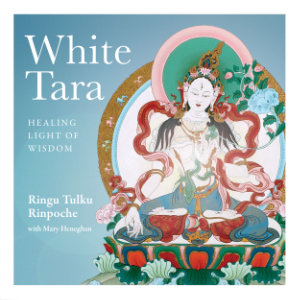
Here is a link to Rinpoche’s commentary on the White Tara Practice:
https://bodhicharya.org/product/white-tara/
If you would like to make a personal offering to Rinpoche, along with a message, please use the button below:
If you would like to make an offering for translations, please click the links below:
- Traduction Française – Karma Sherab Gyamtso
- Deutsche Übersetzung – Arne Schelling
- Tradução para o português – Tsering Paldron
Audio Recordings
Translations