
Mindfulness and me
I was born in India to Buddhist parents. My father was a Buddhist priest. However, I have never been a devout Buddhist. In fact, I was sent to a Roman Catholic school in India and I learnt more about Hinduism and Christianity than my father’s religion.
I have heard a lot about mindfulness over the last few years. I knew that it had its roots in the Buddhist meditation techniques and teachings: however, it was delivered in a faith-neutral way to benefit people from all faith backgrounds and none. Working at the NHS, I heard about its benefit to people suffering from mental health problems and how it contributed to their general well-being. So I finally managed to book myself a place at a weekend mindfulness course in Samye Ling in Scotland.
I was surprised to see a group of 50 people from all over Scotland and South of the border attending the weekend course. Our teacher asked us to reflect on our ‘intention’ and ‘motivation’ for attending the course and I realised that I was attending for a number of reasons. Foremost on my mind was: I was there to discover my roots and to find out ‘what this traditional practice, popular in the subsistence farming communities in the Himalayas, have in common with lives in 21st Century Scotland?’
I must confess that although I spent many years surrounded by various Buddhist deities, I still found it confusing. This is the case with many Buddhist people in Nepal. So it was refreshing to notice that mindfulness does not require any knowledge of such deities and esoteric teachings.
In fact, what I learnt was that it was about becoming more aware of the present moment so that we can enjoy the world around us more, and understand ourselves better. The practice of focusing on my breath etc. helped me to become more aware of the stream of thoughts, sensations in my body and feelings that I experienced, and to see how I become entangled in that stream of thoughts in ways that are not helpful. This then let me stand back from my thoughts and start to see their patterns and I am now learning to train myself to notice when my thoughts are taking over and realise that thoughts are simply ‘mental events’ that do not have to control me.
Most of us have issues that we find hard to let go of, whether it is work stress, relationship issues or financial worries. It is said that mindfulness can help us deal with them more productively. I think that awareness of this kind certainly helps us notice signs of stress or anxiety earlier, and can help us deal with them in a better way.
Over the weekend I heard stories of how many people across Scotland and in the US have found that mindfulness programmes – in which people are taught mindfulness practices across a series of weeks – has brought a reduction in stress and improvements in mood. I met a lot of interesting people who all wanted to be more kind and compassionate. Spending most of my waking moments with them was a very enjoyable experience in itself despite a weekend free from alcohol, meat or coffee –and plenty of midges. And it was a surprising joy to discover that the nearby Tibetan café does fantastic Americano.
The question that struck me most was: ‘How can we be kind and compassionate to others if we deny those feelings to ourselves?’ So if there is one thing that I take away from the weekend it is – be nice to yourself ‘Because you are worth it’. Dave, the mindfulness teacher, loves that hair product, the (L’Oreal) advertisement, although he is bald. And I will remind myself to find time to celebrate a lot more with the villagers and my family in Nepal when I am there.
Well, the Jazz & Blues festival begins today, the sun is shining –there cannot be any excuse not to go…
Gopal Lama 18.07.13
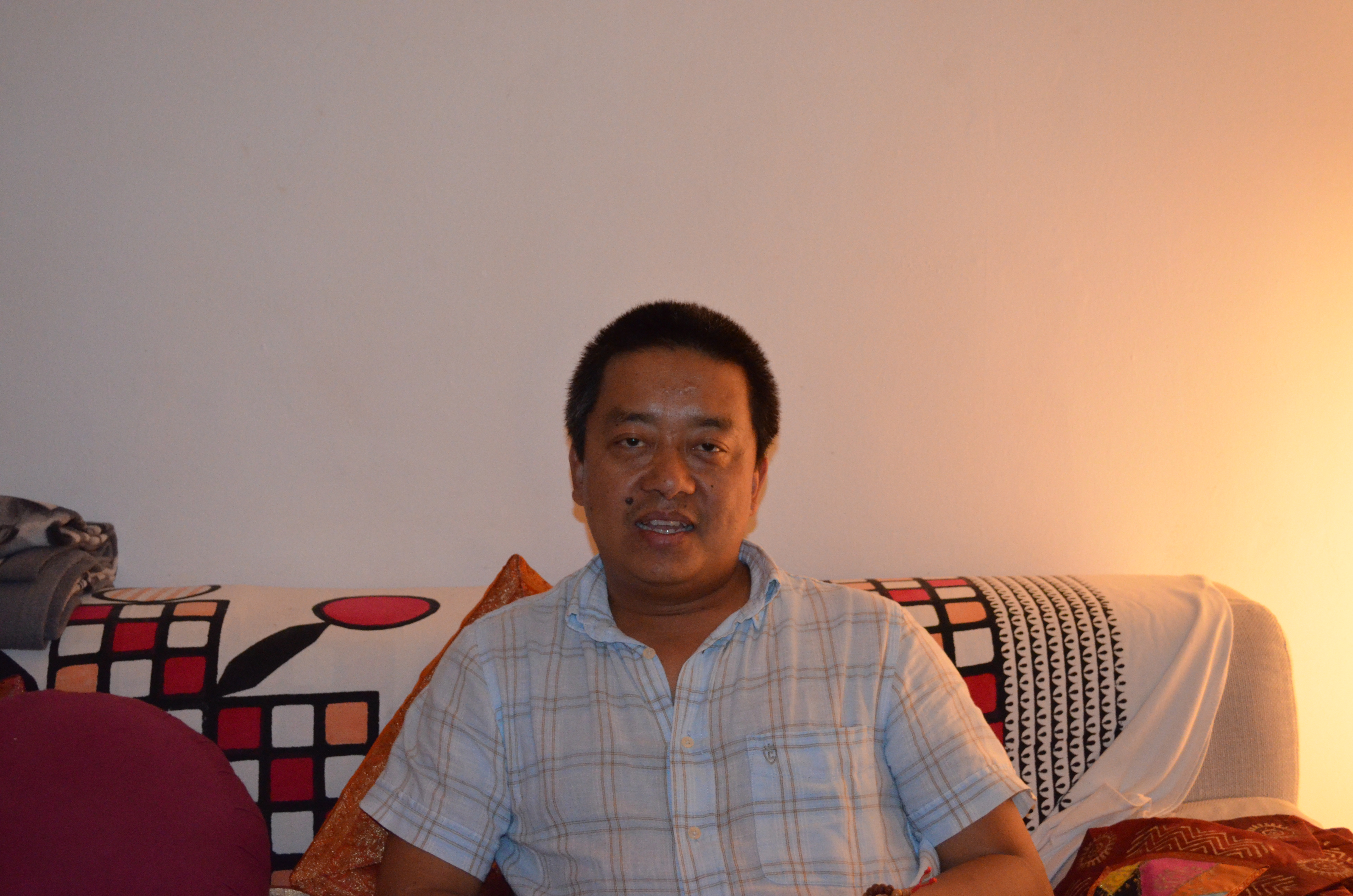
Gopal Lama currently works for NHS Scotland. He is the founder of Yangrima School in Shermatang.
Leave a Reply